
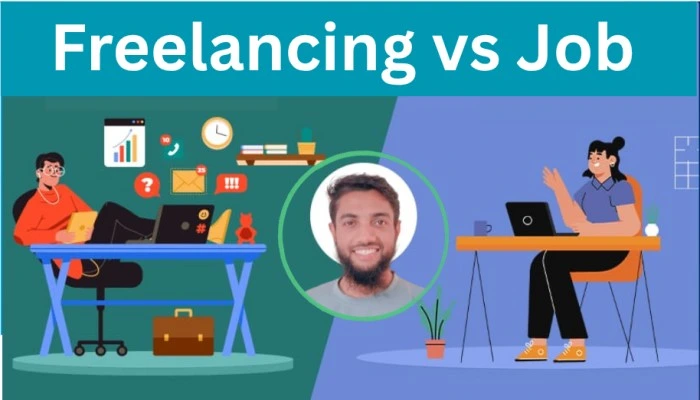
When stepping into the world of digital marketing one of the biggest questions people face is whether to choose freelancing vs job. The truth is there is no one size fits all answer. Both options come with their own advantages and challenges and the right choice depends on your personality, financial needs and long-term goals. Some people prefer the stability of a job while others are drawn to the freedom and earning potential of freelancing. Digital marketing is a field full of opportunities whether you choose freelancing or a job. Success in either path depends on your skills, consistency and willingness to keep learning. Instead of focusing only on which option is better, focus on what suits your lifestyle and goals. The right choice is the one that helps you grow while keeping you satisfied and motivated in the long run.
There is no absolute winner here. If you are just starting out, a job is usually the better option because it helps you build a strong foundation, gain experience, and develop confidence. On the other hand, if you already have a few years of experience and are comfortable taking risks, freelancing can offer higher income potential and greater freedom.
If you are confused between the two, let’s break it down in a simple and practical way so you can make a better decision.
You can start Freelancing without Degree
One of the best things about digital marketing is that it breaks the traditional degree-first mindset. You don’t need a formal qualification to start freelancing in this field. What truly matters is your skills, your ability to deliver results and how well you can present your work to clients. Many successful freelancers today never had a marketing degree they learned through practice, online resources and real projects. This makes digital marketing one of the most accessible career options for anyone willing to learn and take action. If you are consistent, keep learning and focus on delivering value, you can build a strong freelancing career even without any formal education.
- Skills Matter More Than Degrees: Clients don’t ask for your college certificate they care about what you can do. If you can run ads, rank websites or manage social media effectively, you already have value.
- Learn Everything Online: There are countless free and paid resources available where you can learn seo, social media marketing, content writing and paid ads at your own pace.
- Build a Portfolio Instead of a Resume: Instead of focusing on qualifications, create sample projects, case studies or even work on your own website or social pages to showcase your skills.
- Start Small and Grow: You can begin with small projects on platforms like Fiverr or Upwork and gradually move to higher-paying clients as you gain experience.
- Results Speak Louder: If you can show real results like increased traffic, leads or sales clients will trust you, regardless of your educational background.
Jobs Always Demand Degree & Experience
It’s true that most digital marketing job listings mention a degree and prior experience and for many beginners, this can feel discouraging. At first glance, it seems like companies are only interested in candidates with formal education and years of work history. However if you look a little deeper into the industry, you’ll realize that things are not as rigid as they appear. Digital marketing is a skill-based field and while degrees and experience are often listed in job descriptions, they are not always the deciding factors in hiring.
In many cases, companies include degree and experience requirements as a standard part of their job descriptions. It helps them filter candidates and maintain a certain level of professionalism. But in reality especially in digital marketing, employers are more focused on what you can actually do rather than what you have studied.
While it may seem that jobs always demand a degree and experience, the reality is more flexible especially in digital marketing. If you focus on building real skills, creating a strong portfolio and gaining hands-on experience through projects or freelancing, you can still secure a job without a traditional background. In the end, your ability to deliver results will always matter more than what is written on your resume.
- Degree is Often a Formality: Many companies list a degree as a requirement but it is not always strictly enforced. If you can demonstrate strong skills, you still have a good chance of getting hired.
- Experience Can Be Built Independently: You don’t always need a full-time job to gain experience. Running your own blog, managing a social media page or doing small freelance projects can count as real, practical experience.
- Portfolio Matters More Than Resume: Instead of relying only on qualifications, showcasing your work such as SEO results, ad campaigns or content projects can make a stronger impression.
- Startups and Small Businesses Are Flexible: Many startups prioritize skills and results over formal education. They are often open to hiring self taught digital marketers.
- Certifications Add Value: Online certifications from platforms like Google or HubSpot can help you build credibility if you don’t have a traditional degree.
You Can Start Freelancing Early Your Age

One of the biggest advantages of freelancing especially in digital marketing is that you don’t have to wait for the right age to begin. Unlike traditional careers that often require degrees, internships and years of preparation, freelancing allows you to start as early as you’re willing to learn and take action. Whether you’re a student, in your late teens or just starting out this field gives you the freedom to build skills and earn at the same time. Age is not a barrier here your curiosity, consistency and willingness to improve matter far more. Freelancing is one of the few career paths where you can start early and grow at your own pace. Instead of waiting for the perfect time, it’s better to begin with small steps learn a skill, take up small projects and gradually build your experience. The earlier you start, the bigger advantage you create for your future.
Benefits of Starting Freelancing at an Early Age
Starting early gives you a powerful head start compared to others who wait until after graduation. The earlier you begin, the more time you have to experiment, learn from mistakes and grow your confidence.
- More Time to Learn and Experiment: When you start young, you can try different skills like SEO, content writing or social media marketing without pressure. This helps you discover what you enjoy and what you’re good at.
- Early Income Source: Even small freelance projects can help you earn pocket money and become financially independent at a young age.
- Strong Portfolio at a Young Age: By the time others are just starting their careers, you can already have real projects and results to show.
- Better Confidence and Communication Skills: Dealing with clients early improves your communication, negotiation and problem-solving abilities.
- Career Clarity: Starting early helps you understand the industry better, so you can make smarter career decisions in the future.
Why Age Doesn’t Matter in Freelancing
In freelancing, clients don’t ask your age they care about your work. If you can deliver quality results, meet deadlines and communicate professionally, you can succeed regardless of how young you are. Many successful freelancers started in their teenage years and built strong careers before even completing their education.
Freelancing gives you Freedom & flexibility
Freelancing is often seen as one of the most flexible career options, especially in digital marketing and that reputation isn’t just hype. Unlike traditional jobs with fixed schedules and strict rules, freelancing gives you the freedom to design your work around your life not the other way around. You’re not tied to a single office, a single boss or even a single routine. This level of control is exactly why so many people are shifting toward freelancing today. The biggest advantage of freelancing is the independence it offers. You get to decide how, when and where you work which can completely change your lifestyle and productivity.
- Work on Your Own Schedule: You’re not bound by 9 to 5 timings. Whether you’re a morning person or prefer working late at night, you can set a schedule that suits you best.
- Choose Your Clients: Freelancing allows you to pick the clients and projects you want to work on. You’re not forced to stick with work that doesn’t interest you.
- Work From Anywhere: All you need is a laptop and internet connection. You can work from home, a cafe or even while traveling.
- Better Work-Life Balance: Since you control your time, you can balance personal life, studies or other commitments more easily.
Responsibility
While freelancing offers flexibility, it also requires discipline. There’s no boss to remind you about deadlines so time management becomes your responsibility. You also need to stay consistent in finding clients and delivering quality work to maintain a steady income.
Earning Difference Freelancing vs Job
When comparing earnings between freelancing and a job in digital marketing, the difference becomes even clearer when you look at earning potential in dollars. In a typical job, your salary is fixed and grows slowly over time. For example, many entry-level digital marketers earn around $300 to $800 per month while experienced professionals may reach $1,000 to $2,500 per month depending on the company and role. This provides stability, but the growth is usually gradual and limited by company policies. On the other hand, freelancing works on a completely different model where your income is not capped. In the beginning, freelancers might earn $100 to $500 per month but as they gain experience, build a strong portfolio and attract better clients (especially international ones) their income can grow to $1,000 to $5,000+ per month and in some cases even higher. The key difference is that freelancing rewards skill, results and scalability while jobs reward consistency and long-term commitment.
If your goal is steady and predictable income, a job is a safe option. But if you are aiming for higher earning potential and are ready to handle some uncertainty, freelancing can open the door to much bigger financial opportunities especially when working with international clients.
Key Differences in Earnings
- Fixed vs Variable Income: Jobs offer a fixed monthly salary around $300 to $2,500 while freelancing income can vary widely $100 to $5,000+ depending on skills and clients.
- Growth Speed: Job salary increases are usually slow but freelancing income can grow quickly as you improve your skills and attract higher-paying clients.
- Income Limit: Jobs often have a salary ceiling, while freelancing has no upper limit you can scale to $10,000 month or more with the right strategy.
- Stability vs Risk: Jobs provide consistent income every month while freelancing income can fluctuate especially in the early stages.
- Multiple Income Streams: Freelancers can earn from multiple clients globally (often in dollars) while job holders rely on a single income source.
- Effort-Based Earnings: In freelancing, better performance and results can directly increase your income, whereas in jobs, effort doesn’t always translate into immediate financial growth.